
Dirty Engine Oil – 5 Signs Your Car’s Oil Needs Changing
Did you forget to write down the last time you changed your car oil? Never noted where the milage was at when you did? Unless you are keeping detailed information regarding your previous oil changes, it may be hard to know when a fresh batch is due.
Some simple signs that will help identify when your car oil needs to be changed include a check engine light turning on, black sludge appearing on your dipstick, and a change in the smells and sounds coming from your car.
If you think your vehicle is past its oil prime and it may be time for an oil change, but you’re just not quite sure, here are a few ways to quickly tell if you need to take a trip to an oil changing station.
5 Signs Your Car’s Oil Needs Changing
In order for your car to run smoothly, you need an effective and hard-working engine under the hood. If the engine isn’t being assisted with clean car oil, then you are going to experience a whole world of trouble and could ultimately ruin your car.
Now, before we get too far ahead of ourselves, let’s discuss the different signs you will notice if your oil needs to be changed.
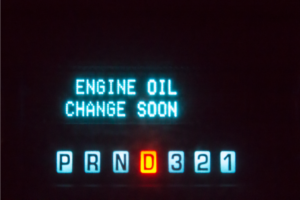
Check Engine or Oil Change Light
One of the most obvious ways to tell if your oil needs changing is the check engine light will flash on when the levels get too low.
So, how does the car know when the oil level is getting to be too low? The oil pressure sensor in your engine control unit can detect when there is less oil pressure flowing through the motor. One reason you will experience a lack of oil pressure is due to low oil.
Dirty, Dark, and Grimy Oil
When you pour fresh oil from a container and into your vehicle, you will notice that the liquid is a pretty amber color that is fairly translucent and smooth.
Over a period of time, you will start to notice that the oil of your car has become dirty and dark in color. This is normal and shows that the oil is properly doing its job. The oil is used to help the motor run properly; as it is being filtered constantly, it will pick up dirt, debris, metal chips, etc., all causing the oil to change in color.
Accumulated Miles
Your oil will start to get dirty after long-term use, which means an oil change is required after long road trips or after a prolonged period of time.
A good rule of thumb is to change your vehicle’s oil about every 5,000 miles, or every three-to-four months. This will depend on the age of the vehicle, make, and model, but this is the average for just about anyone.
Oil Smell Inside the Car
If you can smell that pungent oil odor inside your car, it is definitely a sign the oil levels are low. However, this doesn’t only indicate you need a refill, it is also an indication there could be an oil leak somewhere in the lines.
Once the oil is inside the oil tank of the vehicle and sealed, you shouldn’t be able to smell it anymore. If you do, the oil lines and tank need to be checked, and probably fixed, before an oil change is going to do any good.
Loud Engine Noises
When the oil in your vehicle gets too low, it will stop providing the proper amount of lubricant needed to keep the engine parts moving smoothly.
Without enough lubricant, the metal will start to rub against each other, creating a loud and annoying sound. This is a good sign you need more oil.
The best way to determine if your oil needs to be changed is simply by checking it every once in a while with the dipstick attached to the oil cap. This stick is used to quickly check the oil level inside the vehicle. If the stick indicates the levels are too low, top off the tank with a quality lubricant.
What Happens if You Don’t Change Your Oil?
There are many significant reasons you should maintain your vehicle’s oil levels and make sure it is changed on schedule.
Here are a few reasons you always want to have clean oil in your car:
Damage to the car parts
The oil is used to eliminate friction in your engine. Without clean oil, the engine cannot protect the other components in the vehicle, and the parts are going to wear, warp, and even break.
Engine Will Overheat
When the oil is too dirty, it no longer draws heat from the engine. Without the oil cooling down the motor, your engine could heat. In turn, your engine block can crack, or you could blow a gasket, both costing big bucks for replacements and repairs.
Dirt Builds Up
As mentioned, oil is not only used to lubricate the engine but also to clean it. Once this oil becomes “sludge,” it is no longer going to be able to properly flow through the engine parts or hoses. If the oil is too dirty, it can clog places in the engine and will lead to “oil starvation,” which will cause tons of issues in the engine, eventually destroying it.
Higher fuel consumption
The older and dirtier the oil becomes, the harder the engine is going to have to work. The harder the engine works will require more fuel to get the same amount of power from the vehicle. Just missing a single oil change when your car needs it can result in 2% more fuel consumption.
Summing Things Up
There are multiple ways your vehicle will inform you that an oil change is past due. Always listen to what your car is telling you and keep up on its maintenance and service. A simple miss of a lube change can damage your car beyond repair.
Related Article
How Long Does It Take to Get Your Oil Changed
1 thought on “Dirty Engine Oil – 5 Signs Your Car’s Oil Needs Changing”
Comments are closed.