
Oil filters play an important role in keeping your car running safely and efficiently. Their job is to filter out contaminants from the engine oil, such as dirt, dust, and metal particles, that can cause damage to the moving parts of the engine over time. Without an oil filter, these contaminants can gradually impede the performance of your car.
What happens if you don’t change your oil filter – it will eventually clog up with particles and be unable to do its job properly. This means that any contaminants that were unable to be filtered out by the old filter are now entering your vehicle’s oil system and could potentially damage the internal components of your engine. The severe wear and tear on these components caused by impurities can eventually lead to costly repairs or complete engine failure if left unchecked for too long.
It is therefore important to ensure that you change your car’s oil filter at least once every 12 months or 12,000 miles (whichever comes first). This will help prevent any serious issues from occurring and keep your vehicle running smoothly for longer periods of time.
The Potential Damage to Your Car
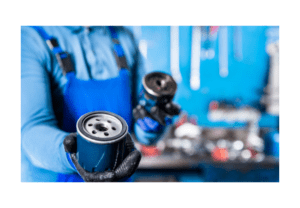
Neglecting to change your oil filter can have serious consequences on the performance of your car. Without an effective filter, the contaminants in engine oil will not be removed and could cause a buildup over time in the oil system. This will make it more difficult for oil to flow through the engine, resulting in reduced engine performance and power.
Over time, a buildup of contaminants can lead to accelerated wear and tear on certain components of the engine, including metal parts such as bearings, crankshafts, and piston rings. It is important to replace these parts if they become too worn out as this could eventually cause internal damage to the motor.
Continuous use of an old oil filter can also result in a buildup of impurities in your vehicle’s oil system. These impurities are composed of dirt particles and other foreign materials that are not good for your engine health or fuel efficiency. If left unchecked, this build-up can cause further problems down the line and even render your car unfit for use eventually.
Finally, using inferior quality filters that are unable to adequately remove these impurities from your vehicle’s oil system can also lead to similar issues over time. You should always ensure you use high-quality filters with a proper rating for your car’s specifications when replacing them regularly.
Signs That Indicate It’s Time to Change Your Oil Filter
One of the most obvious signs that it’s time to change your oil filter is if your car is having trouble maintaining power or performance. If you find that your car is lacking power or taking longer to accelerate than usual, then it could indicate that there is a problem with the oil filter.
If you hear any unusual noises coming from the engine, then this can also be an indication that the oil filter needs to be changed. These noises can range from a knocking sound when trying to accelerate or a rattling noise while the engine is running. Both of these sounds can be caused by contaminants in the engine oil clogging up certain parts of the motor.
Another sign that you need to change your oil filter is if your “check engine” light comes on and stays on even after you have reset it. This could mean that there are contaminants present in the engine’s oil system and this needs to be addressed immediately before further damage arises.
In addition, lower fuel efficiency or poor gas mileage could also be an indication that something isn’t right with your car’s oil system. This decrease in fuel economy could be caused by impurities blocking up passages within the engine, restricting its ability to take in fuel efficiency and allowing for more exhaust fumes out.
Lastly, if your car starts emitting smoke from its exhaust pipe, this may signify how contaminated the engine’s oil has become due to a failing or worn-out filter. Smoke coming from cars typically indicates internal problems and should not be ignored as they can lead to further damage down the line.
Conclusion
Ultimately, not changing your vehicle’s oil filter regularly can have serious long-term consequences for your engine and the overall health of your car. Not only are you risking an unwanted breakdown that could be expensive to fix, but also passing up the opportunity to increase your car’s performance and life longevity. Taking preventive measures now by checking your oil filter on a regular basis is essential for optimal operation.
Just like any other piece of machinery, cars require proper maintenance to keep them running efficiently and without hassle. By adhering to the owner’s manual or taking it in for a professional tune-up, you can rest assured that you’ll get plenty of miles out of your car with a consistently clean oil filter. There are many benefits to being proactive when it comes to replacing your oil filter, so don’t wait until it’s too late—you may just regret it.