
Most modern cars have power steering, and they need power steering fluid to run properly. This fluid allows the steering wheel to turn easily and smoothly. Discover the best power steering fluid for your vehicle to keep the power steering system working properly.
A power steering system has a reservoir filled with power steering fluid that sends the fluid to a PS pump. When the wheel turns, the pump sends the fluid into the steering gear.
You can usually tell when you don’t have enough power steering fluid. Some of the signs are easy to pick up on, but others are a little less obvious. Here, we cover the signs of low power steering fluid, what you need to know about buying more, and the top nine options available.
How Do You Know Power Steering Fluid Is Low

Seven signs indicate that you might have a problem with your power steering fluid. They are:
1. Steering gets difficult.
This is the primary symptom of low power steering fluid and the one that’s most obvious. If the system doesn’t have enough fluid to send into the steering gear, you’ll have a hard time turning the wheel. Usually, this action is simple, but when the steering fluid is low, you’ll find that you have to work much harder to turn the wheel. There will be a lot more resistance, and you’ll know that something’s wrong.
2. You hear noises when you turn the wheel.
Once the fluid gets low, the pump will start to suck in the air. When this happens, you might hear a groaning or whining sound that gets faster as the car gets faster. It may get louder when you turn the wheel, too, especially at slow speeds.
3. The wheel jerks when turning at low speeds.
If you feel the wheel jerking a little when you’re turning into your driveway or a parking spot, you might have low power steering fluid. You may even see the wheel jerking back and forth.
4. The steering wheel locks up.
Eventually, the jerking mentioned above will get worse and the steering wheel will lock. This situation is extremely dangerous as you have little if any control over where your car goes. If this happens, stop driving immediately. Put on your blinkers and get off the road if you can, then get more power steering fluid.
5. There is a noticeable leak.
An obvious reason that power steering fluid might be low is that it’s leaking out. If you see red or pink fluid on your driveway or parking spot after you move your car, you probably have a power steering leak.
6. You hear a screeching sound.
If you hear a loud screeching noise every time you turn the steering wheel, you probably have low power steering fluid.
7. You hear loud squealing sounds when you start the engine.
Like most things in cars, if you let these signs go and don’t add power steering fluid, you can do some serious damage. Low fluid can damage the steering pump and ultimately ruin the power steering system.
What to Look for When Buying Power Steering Fluid
One of the first steps to making sure your power steering system continues to work as it should is to make sure you replace the power steering fluid regularly. If you choose to do this yourself instead of going to a mechanic, here are some things you need to know.
- Make sure you get the right fluid. Your car relies on a lot of different fluids to keep it running smoothly. Each one is different, with its own chemical makeup suited specifically for the job it’s meant to do. If you need to add fluid to your power steering system, you need to use power steering fluid, not brake fluid or transmission fluid.
- Read your owner’s manual. The owner’s manual tells you all kinds of important information, including the recommended viscosity of the power steering fluid you need.
- Figure out whether you need synthetic or mineral steering fluid. Both are available on the market and do what they’re formulated to do. But, if you live in a climate that gets cold in the winter, synthetic is often the better choice because it reaches normal operating temperature faster than mineral oil.
How to Check Power Steering Fluid
Checking your car’s power steering fluid is pretty straightforward once you know the process. The most difficult part is often locating the reservoir.
The power steering reservoir is located in a different place in every vehicle. Look for a small clear container with a black cap. Most reservoirs have MIN and MAX marks on them, and because the material is clear, you can usually look at it and see where the fluid level is. Obviously, you want it to be between MIN and MAX.
You may also see markings for HOT and COLD. It’s important to use the correct markings to get the right reading. So, if you just drove your car and everything’s warmed up, use the hot mark. If the car’s been sitting in your driveway overnight and you haven’t driven it in an hour, use the cold mark.
Some reservoirs have a dipstick that works just like an oil dipstick. Remove the cap, pull out the dipstick, and see where the level is. When you put it back, make sure the unit is completely sealed.
How to Add Power Steering Fluid
You should add power steering fluid if you notice that it’s low, but your owner’s manual will also recommend intervals for changing the fluid to keep it fresh. If you look in the reservoir and the level is fine, but the fluid looks dirty and dark, you should change it.
Old fluid picks up dirt and debris and can start to oxidize, which can damage the power steering pump if left for too long.
How you change your power steering fluid depends on your vehicle, and again, the owner’s manual is the best place to go for this information. That said, most vehicles follow the same general process.
If you’re just adding some fluid, all you have to do is add the correct fluid into the reservoir. Pour slowly to avoid getting any air into the system.
If it’s time to change the power steering fluid, whether for general maintenance or because the fluid is dirty, you can flush the whole system and refill it. This process is a little more complicated, and it can be a little messy.
How Often to Change Power Steering Fluid
First, remove the low-pressure return hose and set it up so it drains into a basin. Use an extra length of tubing if needed to get it to drain where you want it to. Then, start the engine and turn the steering wheel from side to side to flush out all of the oil fluid.
The tricky part (and the very important part) is that you cannot let any air into the system. So, as you allow the old fluid to drain, you have to add new, clean fluid to the reservoir at the same time.
As you move through this process of allowing the fluid to train, moving the steering wheel to pump the fluid through, and pouring new fluid in to prevent air from getting into the system, you will eventually see the new fluid begin to drain into the basin. When this happens, it means the old fluid is out of the system. When this happens, turn off the engine and reconnect the low-pressure return hose.
The 9 Best Power Steering Fluid Options
1. Pentosin CHF 11S High-Performance Synthetic Hydraulic Fluid
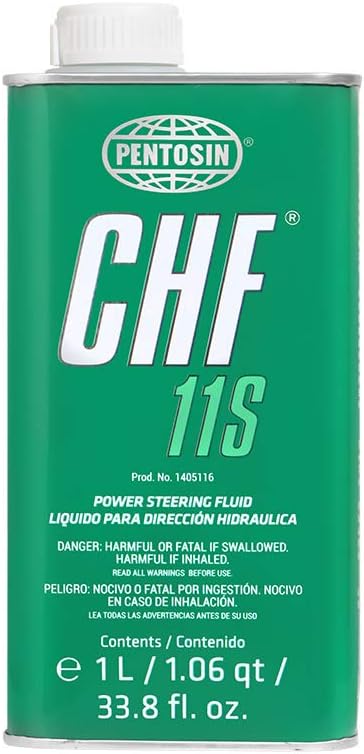
This fluid is specially formulated for many hydraulic systems, including power steering. It’s effective in extreme weather conditions and is guaranteed to perform in temperatures as low as -40 F and as high as 266 F.
People who use this fluid rave about it, and the Pentosin brand has been well-known and respected since it was founded in 1927. It is compatible with most Audi, Mercedes-Benz, Bentley, BMW, Dodge, Chrysler, Ford, and more.
2. Prestone Power Steering Fluid

Prestone has a long history of producing ground-breaking formulas, including this power steering fluid in the recognizable yellow bottle. This fluid increases the life of your steering system, protecting against pump failure and conditioning and rejuvenating seals. It also prevents sludge formation and has antifoam agents and corrosion inhibitors that prevent damage to the metal components of your steering system.
This formula is compatible with cars, crossovers, SUVs, and heavy-duty trucks. It meets manufacturer service requirements for Chrysler, Ford, GM, and more.
3. ACDelco Power Steering Fluid
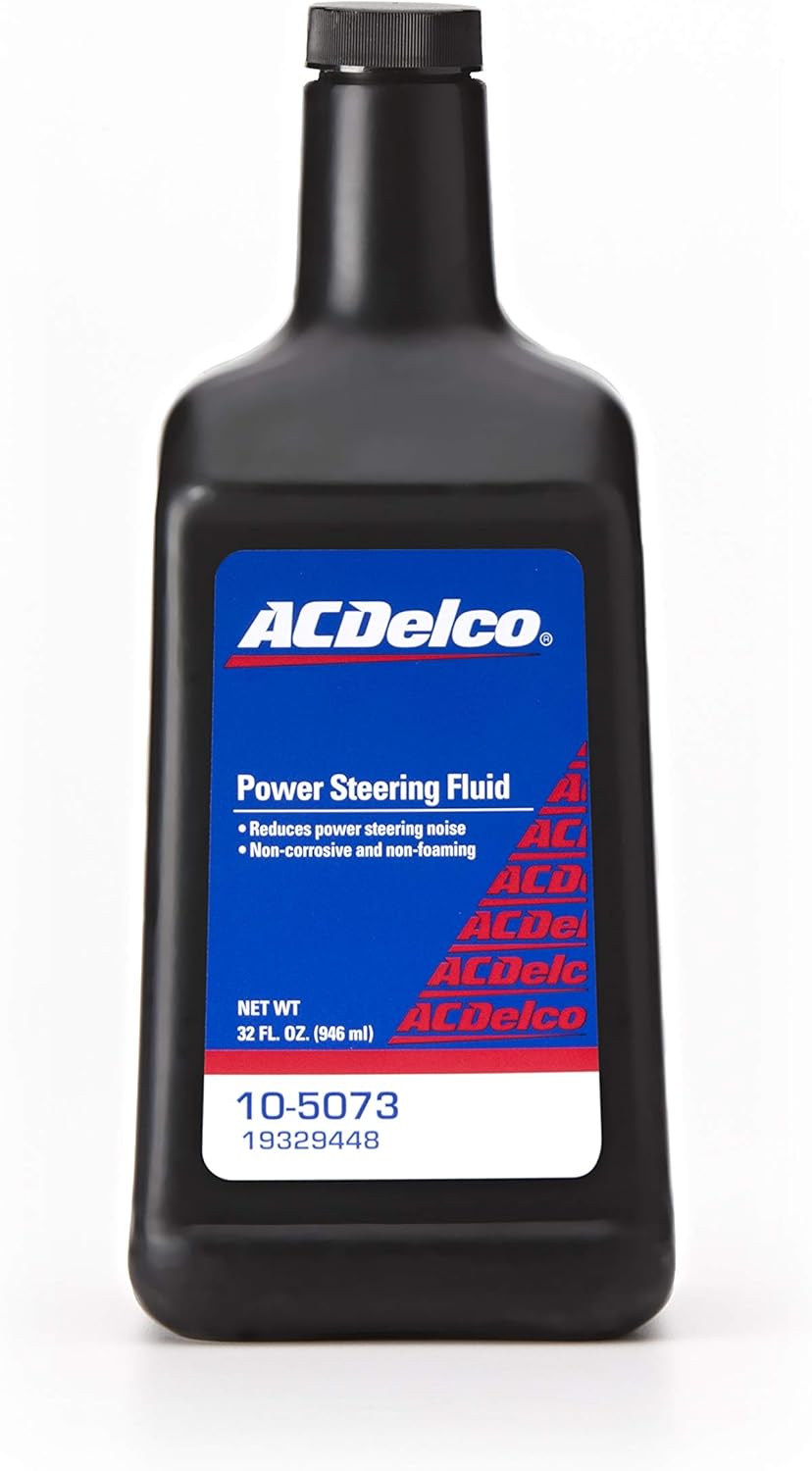
This amber-colored mineral-oil-based power steering fluid is for use in vehicles with a standard hydraulic power steering system. It’s anti-corrosive and anti-foaming, protecting the inner workings of your steering system, reducing noise, and improving performance in all kinds of weather.
4. Royal Purple MAX EZ Power Steering Fluid

Royal Purple MAX EZ Power Steering Fluid is designed to extend the life and performance of your power steering system. It is formulated with synthetic base oils and uses the brand’s proprietary blend of additives to make your system run longer, quieter, and more efficiently.
This product is formulated to extend pump life and provide greater wear protection, and it’s non-foaming and protects against corrosion and rust.
5. Lubegard Complete Synthetic Power Steering Fluid
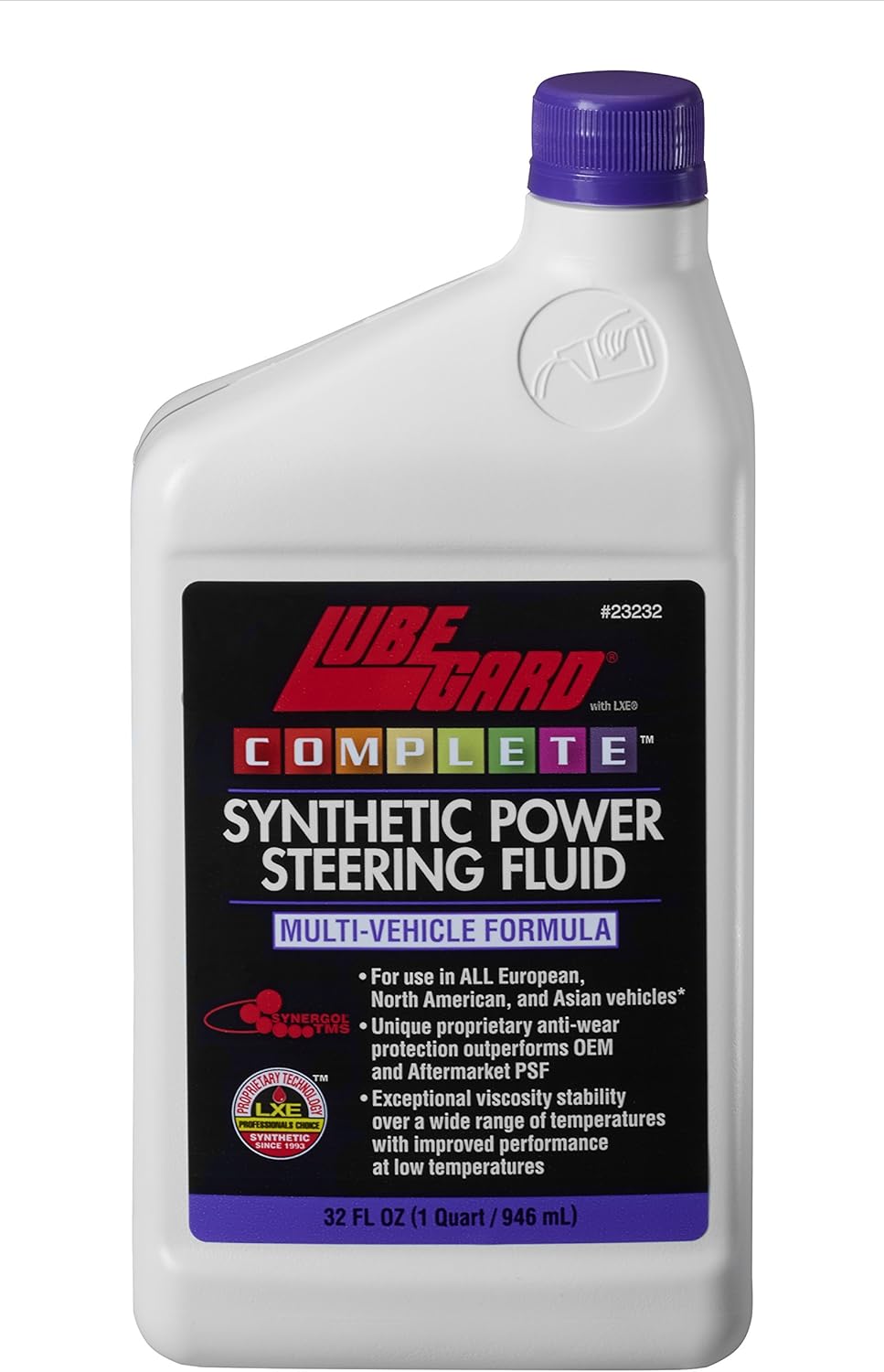
This Lubegard product is great for all European, North American, and Asian brands and is specifically recommended by Honda. It has a synthetic base and includes two patented additives from the brand. SynergolTMS is a special blend of carbon, oxygen, and hydrogen meant to extend the wear of the power steering system, and LXE or Liquid Wax Ester makes the product heat stable.
This fluid significantly reduces friction, protects against rust and corrosion, and works in a wide range of temperatures, from -41 to 130 F. It also protects hoses and seals to reduce the chances of leaks and prolongs the life of steering system parts.
6. Red Line Power Steering Fluid
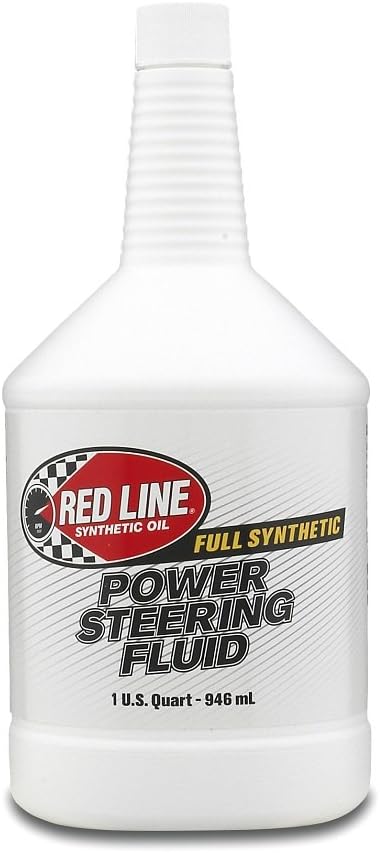
Red Line’s power steering fluid is suitable for most makes and models and is formulated to improve protection and avoid power loss. It’s lightweight and able to tolerate high temperatures, avoiding steering fading in hot weather and difficult steering in the cold.
This fluid resists evaporation, thermal breakdown, and foaming, supporting high pump output and preventing squealing and leaking. It’s compatible with synthetics and petroleum and is exceptionally affordable.
7. Johnsen’s Power Steering Fluid

Johnsen’s actually offers four power steering fluid options, all of which are great. We’re going to be looking at the original formula and universal power steering fluid formulas, but they also have a Leal Sealer & Conditioner and fluid just for Hondas and Acuras.
The original formula mixes with most power steering fluids. It protects against unusual wear, protects seals, and stops pump squeaking. As for the universal formula, it meets the specifications for most imported and domestic brands, including GM, Ford, Honda, Toyota, Nissan, and Chrysler.
8. RAVENOL Power Steering Fluid

This power steering fluid from Ravenol maintains consistent viscosity, even in extreme conditions and temperatures ranging from -40 to 266 F. It’s anti-foaming, provides amazing corrosion protection, and preserves and protects seals, extending the life of your steering system.
9. STP Power Steering Fluid & Stop Leak
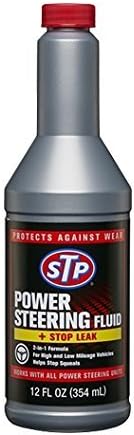
Finally, we recommend this product from STP. It’s a unique 2-in-1 formula that protects against wear and leaking and is compatible with all approved power steering fluids. It works by conditioning dry, hard, and shrunken seals to slow down or prevent leaking while also functioning as a regular power steering fluid.
Note that to stop leaks or reduce the amount of fluid loss, you need at least to add at least 7 oz per quart of this product. See your owner’s manual to ensure your system has the right capacity. It is also unlikely to work with deals that are scored or broken.
Final Thoughts
Checking your power steering fluid is an important part of car maintenance. You’ll likely know when there’s a problem because you’ll begin to notice them. If you’re looking for a good product to top off the reservoir or top off the system with, consider the nine products we listed above.