
The diesel or gasoline engines produce the power required to push you down the road. All the functions that an engine performs also produce a lot of energy that’s wasted in the form of heat. If that heat isn’t dumped efficiently by being extracted from the mechanism, it can damage your vehicle’s engine.
Engine coolants are used to get rid of the heat that your engine produces. This article discusses everything you need to know about coolants along with their different types. Let’s jump right in.
What is an Engine Coolant?
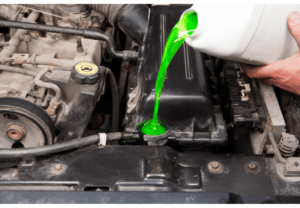
In simple words, an engine coolant is a blended mixture of antifreeze and water. It comes in a liquid form to cool your vehicle’s engine and has the following qualities.
- Reasonably high boiling point.
- Very high specific heat value that allows it to contain more heat as compared to any other liquid.
- Can be bought from almost all the automotive parts stores.
- Comes with a low-price tag.
Why Can’t You Use Water as a Coolant?
Using water as a coolant isn’t advisable because of the following.
- The freezing point of water is not suitable for people who live in high latitude climates.
- Water expands when it freezes and can damage pipes and even radiators.
- Water can lead to rust and corrosion that can lead to costly repairs.
How Does Engine Coolant Work?
Engine coolant is added to the reservoir that’s affixed to your vehicle’s reservoir and it’s used with the engine’s liquid cooling system. This system is made up of the following components.
- A coolant or a water pump allows the liquid to circulate across the system.
- A radiator that takes heat away from the engine’s cooling system.
- A thermostat that controls the coolant’s temperature.
- A fan that moves the air through the radiator, especially when the vehicle is moving at a slow speed.
The engine coolant constantly runs through the radiator and engine as the vehicle moves. Once the coolant is cooled, it exits from the radiator’s bottom. Then it’s drawn into the coolant pump and transferred to the block and head of the engine.
Here it absorbs the heat energy and cools down the engine’s temperature. Then the coolant goes back to the radiator’s top to cool again.
Different Types of Coolants
The market is filled with hundreds of different types of coolants but here we’ll break down that dizzying quantity into the basic types so that you can understand each type easily. We’ll also discuss the basic coolant colors that you need to know.
Basic Components of Engine Coolants
Usually, engine coolants contain three basic components discussed below in detail.
Water
The first component of the engine coolant is water because it’s one of the most abundant and best head exchanging mediums on earth. However, water alone can’t do the task as it can freeze in colder climates. In addition, the temperature of your engine can also increase to the water’s boiling point where the water starts to evaporate.
Antifreeze
Antifreeze (glycol most commonly) is another important component of an engine coolant. Usually, propylene or ethylene glycol is used because it allows water to withstand both boiling and freezing temperatures.
The antifreeze also comes with superior heat exchanging characteristics. Bear in mind that you must not mix ethylene glycol and propylene glycol together because these chemicals can react badly and lead to errors while measuring the freezing temperatures.
Additives
Some additives are also added to engine coolants like chemical inhibitors. It’s added to the engine coolant because it keeps the liquid mixture from rusting or corroding your vehicle’s coolant pump, radiator, and all the other components involved in the cooling system.
Common Colors of Engine Coolants
The most common colors of engine coolants are orange, yellow, blue, red, and green where each comes with different properties.
Orange or Yellow Engine Coolants
Orange or yellow engine coolants are used worldwide and they’re based on the latest technology. Some orange and yellow engine coolants allow you to mix them together to a certain percentage of the cooling system’s overall capacity. You must keep it in mind while topping up.
Blue Engine Coolants
Blue engine coolants are typically based on the OAT (Organic Acid Technology). These coolants are usually borate-free and that’s why they’re most commonly used in modern Japanese vehicles. These vehicles also come with blue engine coolant as they need a borate-free liquid.
Red Engine Coolants
Red engine coolants also come with OAT (Organic Acid Technology) base but they have a little different chemical composition. They’re different from blue engine coolants because of the addition of borate.
These engine coolants are usually phosphate and silicate-free and are most commonly used in vehicles with radiators made of aluminum. You’ll find them in both modern European and Japanese vehicles.
Green Engine Coolants
Green engine coolants are the most commonly used type of coolant and they come with an ethylene glycol base.
Common Types of Engine Coolants
The following are the most commonly used as well as the oldest type of engine coolants along with the colors they’re available in.
IAT (Inorganic Acid Technology) Engine Coolants
Common Available Color: Bright Green
The IAT base coolants are the oldest type of engine coolants. Almost all the manufacturers used to install this type of engine coolant in their vehicles until 1994. Some manufacturers such as Ford continued using the IAT engine coolants until 2002.
However, the European and Asian car manufacturers stopped using the IAT coolants in 1990. Being a green color coolant, it contains silicates and phosphates and offers great performance when used with aluminum or copper radiators and cast-iron engine blocks.
It’s important to note that this type of coolant must be thoroughly flushed out and replaced with the new one every 36,000 miles or 2 years. If the IAR-based coolant remains in the vehicle’s engine beyond these limits, it’ll degrade the overall cooling performance by forming clogging solids. One of the most common problems of this coolant is heater core blockages.
OAT (Organic Acid Technology) Engine Coolants
Common Available Colors: Pink, Dark Green, Blue, Red, and Orange
The OAT engine coolants are free of silicates and phosphates. Vehicle manufacturers started using this type of coolant after 1994. The life of this coolant blend is also long as compared to IAT engine coolants and it can work efficiently for 135,000 miles or 5 years.
The OAT coolants use carboxylic acids as an additive and they can be found in modern vehicles all around the world. The addition of corrosion inhibitors allows this type of coolant to last for a longer time.
However, if you don’t renew this engine coolant in time, it can start damaging the metal parts of your engine’s cooling system. While the OAT engine coolants are commonly used in modern vehicles, you can also add them to your older model.
However, it’s important to check your manufacturer’s manual to make sure whether using this type of coolant is safe for your vehicle or not. Typically, the OAT coolant blends are used in Toyota, Nissan, Mitsubishi, Honda, VW, GM, Chrysler.
As a side note, you can visit a local authorized dealer of these manufacturers to find the right engine coolant at the best prices.
OAT Subtype: DEX-Cool
Common Available Color: Orange
The DEX-cool is an OAT-type engine coolant. It was developed by GM cards back in 1995. This coolant must never be mixed with any other type of antifreeze or coolant because it can lead to blockages.
HOAT (Hybrid Organic Acid Technology)
Common Available Colors: Purple, Blue, Pink, Turquoise, Yellow
The HOAT engine coolants fall between the OAT and IAT types and they’re most commonly used in modern Asian and European vehicles. Chrysler is also using this type of engine coolant in its vehicles.
The hybrid organic acid technology coolant contains silicates that not only prevent corrosion and rusting but also increase aluminum protection. This type of coolant also lasts for a longer period of time and you’ll need to change it after 5 years or 150,000 miles.
Should You Change Your Engine Coolant Type and Color?
If your manufacturer’s manual recommends using a specific type of engine coolant, you should not change it. For example, if your vehicle uses an IAT coolant blend and you change it to OAT, the coolant will start eating your engine’s radiator from the inside.
Not only will it damage the radiator but it also won’t work efficiently to cool your engine. While your radiator won’t get damaged overnight as it takes some time, you still should switch to any other type of coolant.
It’s also important to follow the recommendation of your vehicle’s manufacturer regarding the coolant system capacity. Following the proper coolant level is critical because if you use your vehicle with less coolant than recommended, you might start experiencing overheating and efficiency issues.
Can You Mix Different Types of Engine Coolants?
Keep in mind that mixing different types of engine coolants don’t increase their efficiency. For example, adding HOAT or OAT coolants to the IAT blend will cancel out the benefits of OAT and HOAT and it also won’t increase the life of your IAT coolant.
Additionally, you can also end up with coolant gelling if you’re not an expert and mix two wrong coolants together.
Can You Mix Engine Coolants? Read This to Find Out
What Type of Coolant Should You Buy for Your vehicle?
Going to the authorized dealer part counter to buy the engine coolant for your foreign, domestic, or late model car is your best bet. This way, you’ll only buy the engine coolant that’s most suitable for your vehicle.
You might need to pay a few bucks more, but it’ll provide you with the confidence that you’re using the right engine coolant formulation that’s specifically designed for your vehicle’s engine.
You can also open your manufacturer’s manual to find out the recommended coolant type if there’s no authorized dealer in your area.
How Often Should You Renew Your Engine Coolant?
The change interval of your engine coolant depends upon its type, your vehicle, your engine’s condition, and your driving habits. Just like other fluids in your vehicle, engine coolant must be maintained properly and you also need to change it according to your manufacturer’s recommendations.
You might need to buy a little more expensive coolant designed for a certain manufacturer with specific additives for a high-mileage vehicle. Typically, the engine coolant should be changed after 36,000 to 150,000 miles depending upon your vehicle.
Some high-performance and exotic vehicles also require you to change your engine coolant every 10,000 miles. Keep in mind that you must drain out the old engine coolant thoroughly before adding the new one to your vehicle. You don’t want the dirt and rust particles that your old coolant has, to be mixed with the new one.
Benefits of Changing Engine Coolant Timely
Choosing the right type of engine coolant and changing it at the right time allows you to:
- Keep your vehicle’s engine cool all the time to achieve the most efficient performance.
- Avoid overheating issues that can badly damage your vehicle’s engine.
- Keep the engine coolant from boiling during high temperatures.
- Keep the engine coolant from freezing in cold temperatures.
- Prevent rust and corrosion of cooling system components.
- Keep electrolysis from happening.
- Prevent non-metallic elastomers’ wear like plastic and rubber parts.
Adding a wrong type of engine coolant to your vehicle can affect your vehicle negatively in the long run. In the worst cases, it can also damage your vehicle’s engine badly and you’ll need to spend hundreds or even thousands of dollars to repair or replace the vital components.
Final Thoughts
Engine coolant is one of the most important fluids that your vehicle needs to perform optimally. It only allows your engine to cool down but it also increases the overall lifespan of the engine.
We hope this guide will help you understand different types of engine coolants along with their working mechanism. Make sure that you follow the recommendations of your vehicle’s manufacturer to choose the most suitable coolant for your engine.
1 thought on “What Are the Different Types of Engine Coolants?”
Comments are closed.