
Any responsible car owner knows that if you want your vehicle to last a long time, you have to take care of it. Regular maintenance matters. And while most people know enough to change the engine oil and check their tires, one thing that you might not think too much about is the power steering fluid.
What Does Power Steering Fluid Do?
Power steering is one of those things that you might not notice until something goes wrong with it. The power steering system makes it easier to turn the steering wheel. If you’ve ever driven a car without power steering, you know what a difference it makes. Making tight turns or turning the wheel quickly is especially difficult. It takes a lot of physical effort to make it work.
What Happens If You Don’t Change Your Power Steering System?
If your power steering fluid runs low or gets old and you don’t replace it, many things can happen.
The first thing you might notice is that it’s hard to turn the wheel, or you might hear weird noises coming from under the hood, but there’s a lot of things going on inside.
When it’s time for you to change the power steering fluid, it’s likely either low or dirty. If the fluid is low, there’s a good chance that air can get into the system, which can lead to corrosion and rust. Air also means that some of the metal areas are not being properly lubricated, which can cause wear and tear. Old fluid may be carrying dirt and other debris, which can also damage the steering system.
With enough damage, it could destroy the whole steering system and lock your steering wheel. When this happens, it’s exceptionally dangerous, especially if you’re traveling somewhere where you can’t easily get to the side of the road.
4 Ways to Know When It’s Time to Change Power Steering Fluid
Here are the four things to look for to know when it’s time to change your fluid:
1. It’s been a long time
Power steering doesn’t work well forever, just like any other fluid you put in your car. Even if you don’t drive much, the fluid will break down over time or begin to collect particles and other contaminants. These things can get into the pump and cause a lot of damage. To prevent this, change the power steering fluid regularly. Flushing the system can also help prevent this type of debris from collecting causing damage.
2. You hear noises
Many car issues are discovered when strange noises start, and issues with your power steering fluid are not different. Once the fluid gets low, the pump will begin to suck in air, which often sounds like a whining or groaning sound. Sometimes, it gets faster as the car accelerates, and it may be more noticeable when you turn the wheel at slow speeds.
Other sounds that may indicate a problem with the power steering include loud screeching noises when you turn the wheel or a loud squeal when you first start the engine.
It’s not always easy to diagnose a problem just from the noise your car is making. If in doubt, head to your mechanic for some expert advice.
3. It’s really hard to steer
Steering gets tricky when you have a problem with your power steering fluid. Sometimes, you might notice that the wheel starts jerking back and forth a little when you turn into your driveway or parking spot. Eventually, this will get worse, and it will become very hard to turn the wheel.
If you don’t change the power steering fluid when you begin to notice these problems, there’s a chance that the steering wheel will lock. To prevent this, check the power steering fluid as soon as you notice it’s a little harder than usual to steer.
4. Look at it
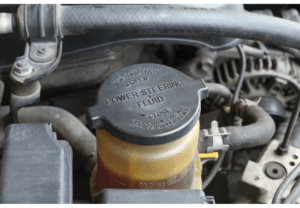
Actually getting under the hood and looking at your power steering fluid is another way to know if you need to change it. First, locate the power steering reservoir. Open the cap, then take a look inside. If the fluid looks low, sometimes all you have to do is top it off. If it looks dark or dirty, you may need to do a power steering flush and replace the old fluid. Also, if you take off the cap and the fluid has a bad odor, do a power steering fluid flush and change to new fluid it right away.
Another great tip…
One of the best things you can do to understand more about your power steering system is to read the owner’s manual. The owner’s manual will tell you a lot of useful information about your car, and it’s a good place to start if you want to get a better idea of what’s going on under the hood.
Every make and model has its own guidelines about when to change the fluids, including the power steering fluid, and the owner’s manual should spell out clearly how often you should change the fluids.
Pay attention to the kind of fluids the manual recommends, too. If you ever use a fluid that is not recommended, it could seriously damage the steering components or even the entire vehicle.
If you’re looking for a general guideline, though, it’s a good idea to aim to change the fluid at least once every two years or about every 50,000 miles. But, again, the owner’s manual is the authority and may recommend something different.
Don’t Wait Until It’s Too Late
A lot of time, people get nervous when they start to hear strange sounds coming from under the hood or feel something is a little off when they steer. Car repairs are notoriously expensive, but ignoring them usually ends up being even worse.
If you find it’s hard to steer or you hear a whining noise, you may just need to flush your old power steering fluid and add new fluid. It’s an inexpensive and quick fix that could save you from causing major damage to your power steering system.
Related Article
Where is the Power Steering Reservoir?
2 thoughts on “How Often to Change Power Steering Fluid – 4 Ways to Know When It’s Time”
Comments are closed.